admin

GARDE to handle large-scale remodeling project of the Guofang Department Store in Lanzhou, China

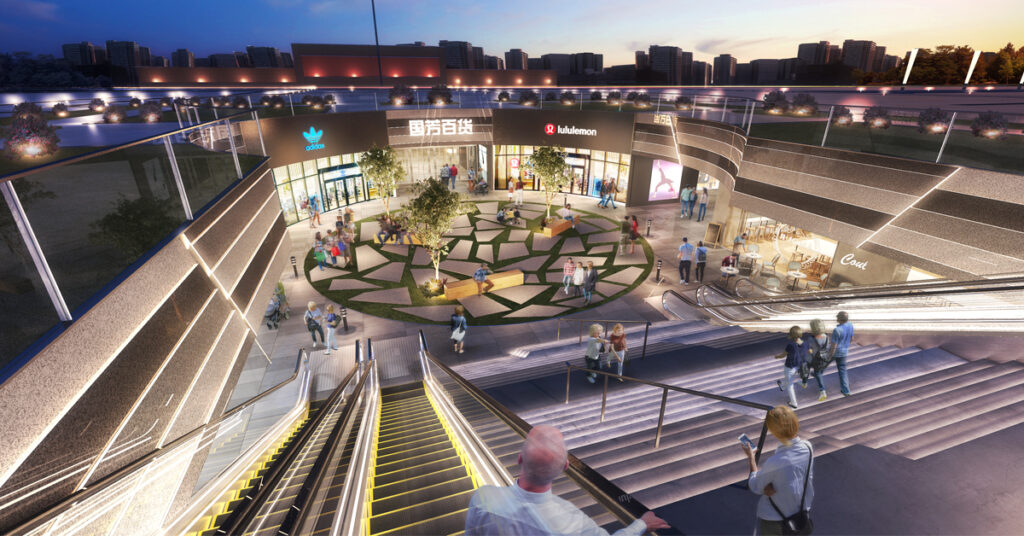
Lanzhou City is the capital of Gansu Province, located in northwest China. The Guofang Department Store, located next to the Dongfanghong Plaza in the heart of the city, is a luxury department store with world-famous luxury brands. In addition to the first basement floor of the Guofang Department Store, this project featured a large-scale remodeling of the Dongfanghong Plaza and the shopping center on the west side of the square.

●Department Store Side

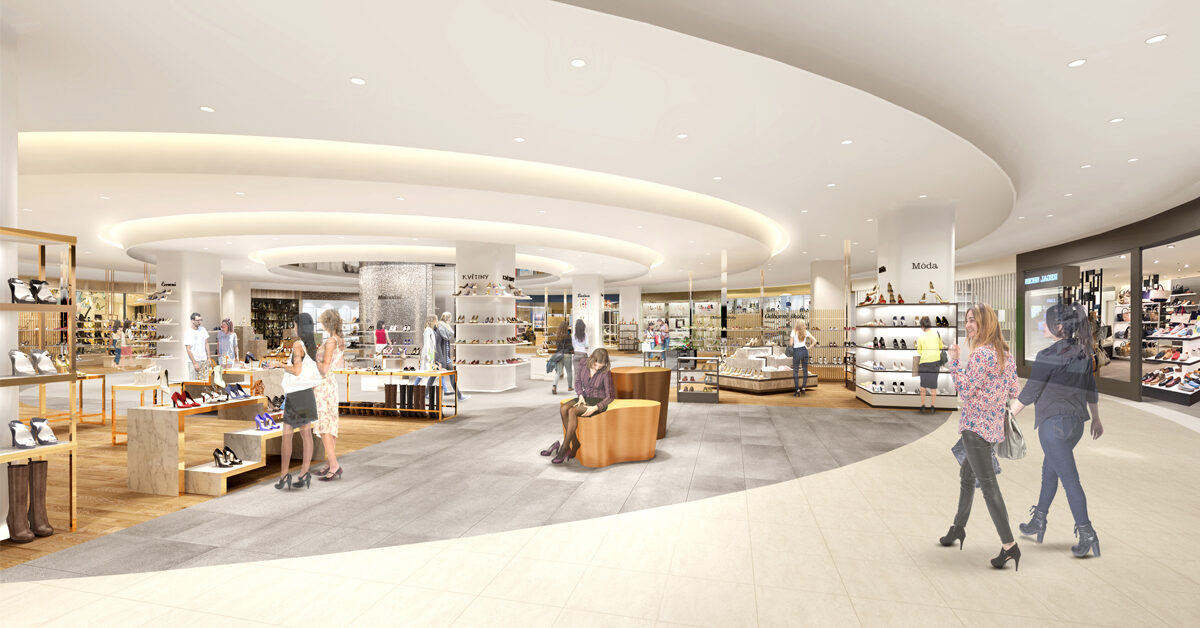
Shoe Sales Floor; Creating a dynamic circular space from a circular flow line

Since the sales floor is very deep from the entrance of the ESC hall, we designed a circular flow line so that customers can naturally walk around the floor without being burdened by the depth. We also linked this flow line shape to the ceiling design to emphasize the circular space. The circular design of the ceiling is designed so that it is lowest in the center and becomes higher toward the outside. This creates a dynamic space that expands from the center to the outside. The design and placement of the pillars have been calculated so that they do not divide the space, allowing for a relaxed and smooth shopping experience.

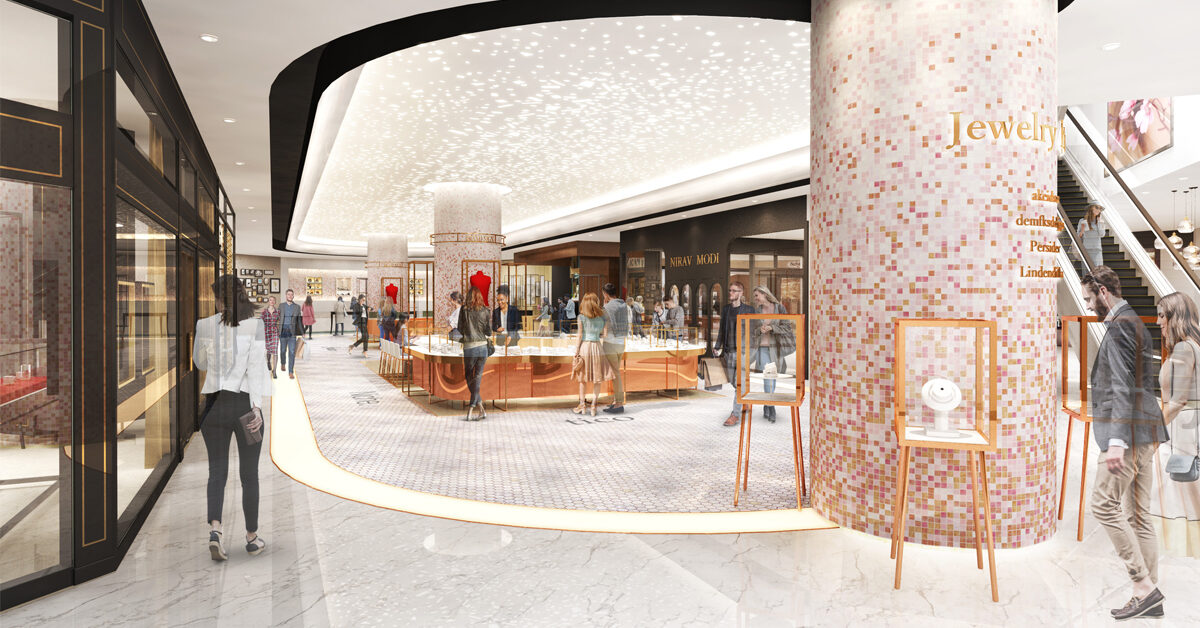
Jewelry sales floor; Main flow line with feminine sparkle

As a focal point of the space, the height of the store in the center was kept low to create a flow line that allows customers to walk around while looking at the jewelry. In addition, the ceiling is designed to leak glittering light, emphasizing the glamour of the jewelry sales floor, and creating a space that allows a smooth circulation to the tenants at the far end.

●Shopping center side

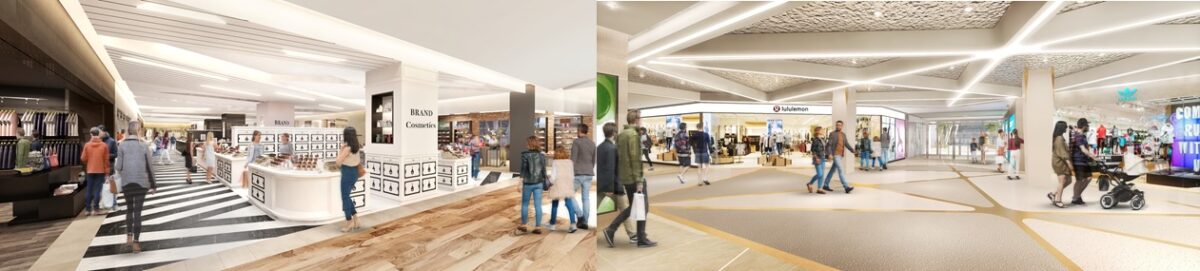
The design concept revolves around “Natural Geometric Shapes”. Originally, Lanzhou was a land rich in mineral resources such as coal, so we used the city’s resources as a design motif to create a Lanzhou-like atmosphere. The design of the entire corridor is simple, while the areas where the corridor intersects and diverges emphasize the geometric shapes and create clear space.

Simple corridor design

Intersection area of passages with Geometric Shapes motif.

Scope of work
Concept, basic planning, basic design, implementation design, supervision 

Property Information
Location: 4-6 South Hiroba Road, Chengguan District, Lanzhou City
Area: 24,870㎡ (The total floor area of Goufang Department store is 90,000㎡)
Completion: May 2021

Living Spaces Where East Meets West

The idea of merging the east and west has been around for decades. It was most pronounced in the 17th Century when European nobility dressed their estates and manors in opulent chinoiserie. This design approach has since evolved to reflect the evolution of both eastern and western cultures. Spaces where east and west meet blur the lines between boundaries and geography.

CERULEAN TOWER TOKYU HOTEL

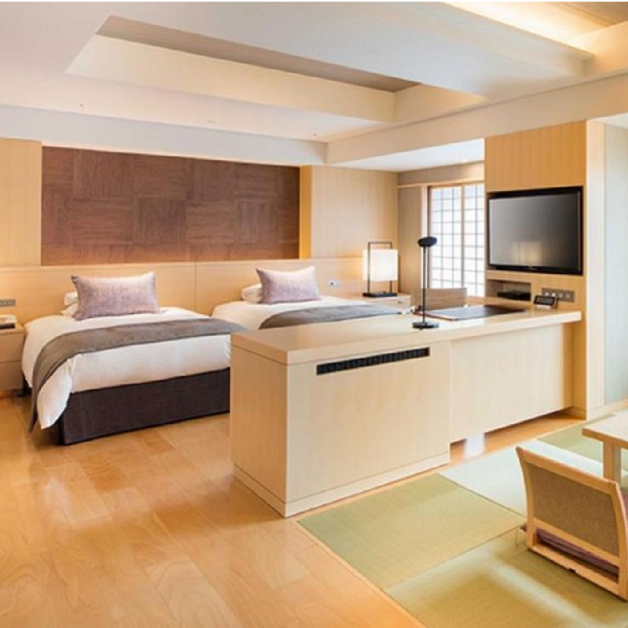
Inspiration: The CERULEAN TOWER TOKYU HOTEL in the Shibuya district brings together minimalist Japanese design and classy Western design. Custom carpets inspired by Genji Monogatari scrolls in the Goto Museum are backdrops for seamless wooden furniture with Japanese taste and pops of color. Modern patterns on throws, carpets, and headboards contrast against the wooden furniture.

(Image guide and caption: Suites at the Cerulean Tower  Hotel in Tokyo merge elements of Western contemporary design)

Dalisay Collection 

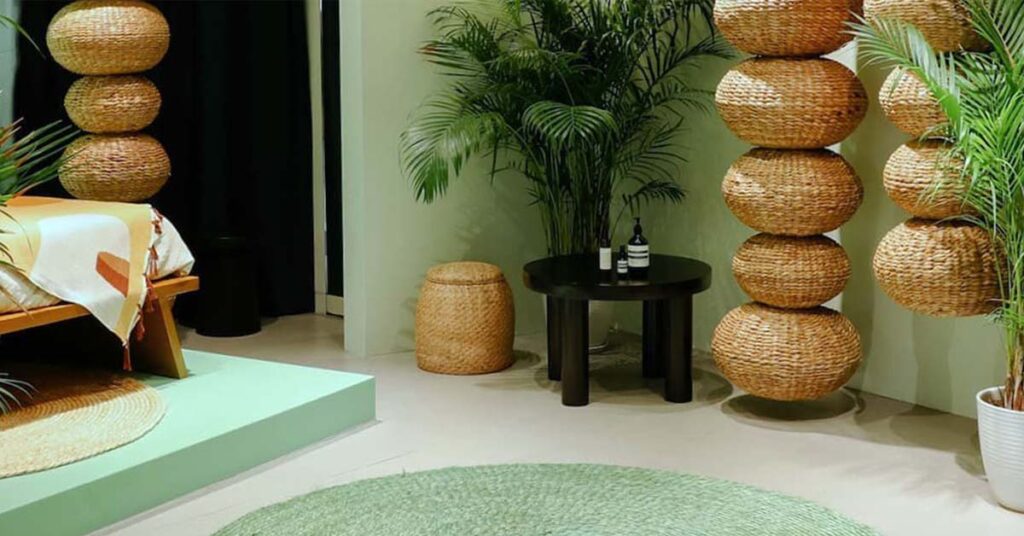
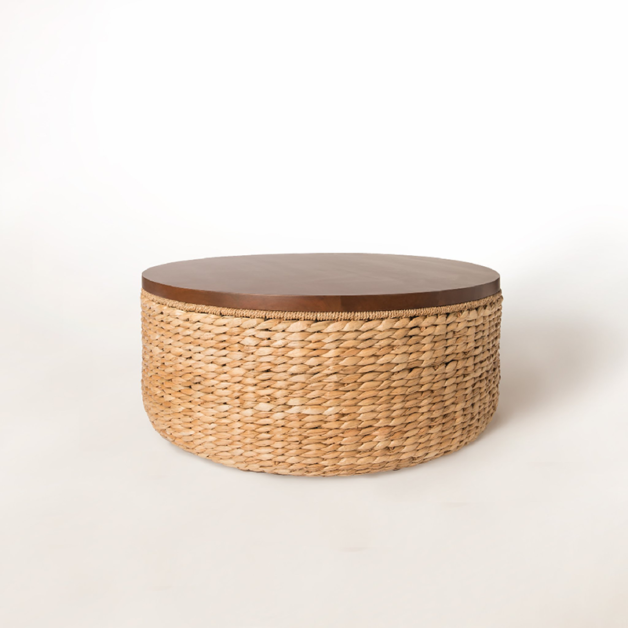
Design tip: Consider Asian antique or artisanal woodwork from Southeast Asia. DALISAY COLLECTION’s pieces create a sense of grain, texture, and depth. Details like woven hyacinth or use of volcanic stone bring the story of creativity and craft into your living space.

(Image guide and caption: Dalisay Collection works with natural materials like woven hyacinth, volcanic stone, and rich Acacia wood, to bring a sense of artisanal craft into your living space)  

Karimoku Case Study

Design tip: Stick to a subtle color palette that will harmonize with natural materials like wood or stone. Enhance your space with soft lighting and the occasional pop of color or print.

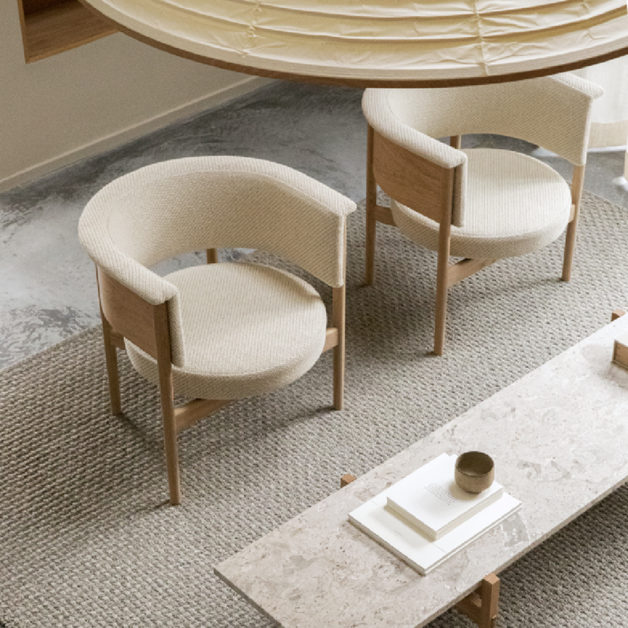
The Kinuta Terrace bench from KARIMOKU CASE STUDY takes its inspiration from the doors of Japanese shrines and temples. Simultaneously, it heavily references the sensibilities of Danish designer Poul Kjoerholm. Using oak and marble, each element is spaced and levelled to allow light to flow through.

(Image guide and caption: The Kinuta Terrace bench from Karimoku Case Study is laid out at the Archipelago House) 

 KENNETH COBONPUE

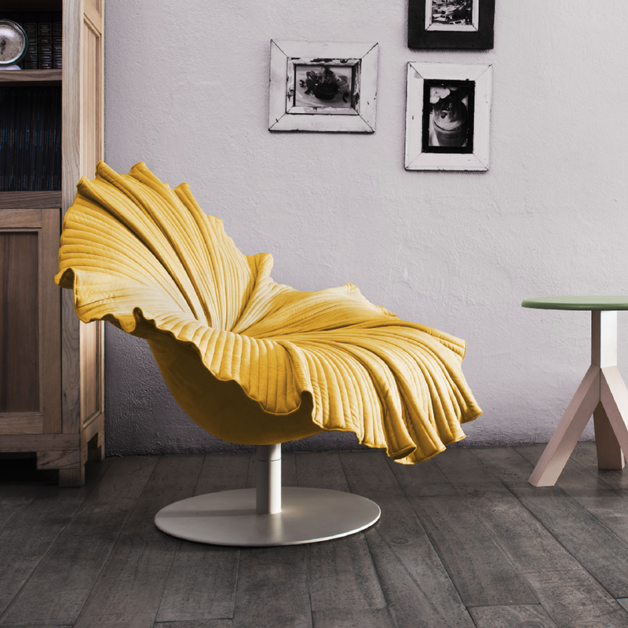
Design Tip: To enhance indoor spaces that celebrate the east and west, focus on accent pieces with a strong design proposition. World-renowned, multi-award-winning furniture from KENNETH COBONPUE blurs the line between east and west with sculptural pieces that celebrate Asian craft and innovative silhouettes of the west. Iconic pieces like the Bloom Chair or Hagia Daybed are stunning anchors that look out to breathtaking views.

(Image guide and caption: Statement pieces by KENNETH COBONPUE immediately infuse indoor spaces with elements from both the East and West.)

 AMANOI 

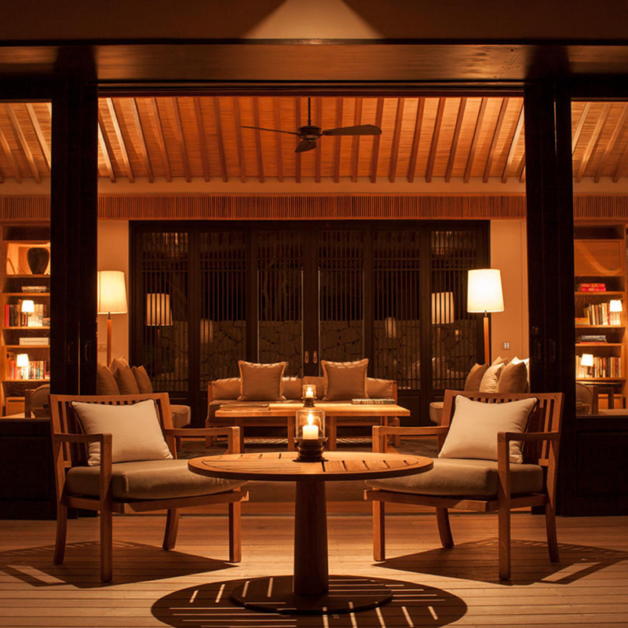
Inspiration: A secluded piece of paradise overlooking the Vinh Hy Bay in Vietnam, AMANOI sets the mark for living spaces that merge the east and the west. Spectacular views of pavilions act as backdrops for intricate lattice work and wood carvings reflective of Southeast Asian craft. Accents by way of artifacts, statues, pottery, or ceramics serve as nods to the region’s artisanal industry.

(Image guide: The three- bedroom residence at Amanoi in Vietnam)

Sources:

https://ifworlddesignguide.com/entry/284147-cerulean-tower-tokyu-hotel
https://www.dalisaycollection.com/
https://www.karimoku-casestudy.com/furniture/kinuta-n-ct01/
http://www.kennethcobonpue.com/
https://www.mrandmrssmith.com/luxury-hotels/amanoi
https://www.aman.com/resorts/amanoi

For photo credits:

1. Photos of Cerulean Tokyu Tower courtesy of CERULEAN TOKYU TOWER
2. Photos of Dalisay Collection courtesy of DALISAY COLLECTION
3. Photos of Karimoku Case Study courtesy of KARIMOKU CASE STUDY
4. Photos of Kenneth Cobonpue courtesy of KENNETH COBONPUE
5. Photos of Amanoi courtesy of AMAN RESORTS

Xiqu Center in Hong Kong: Contemporary Space for Chinese Culture

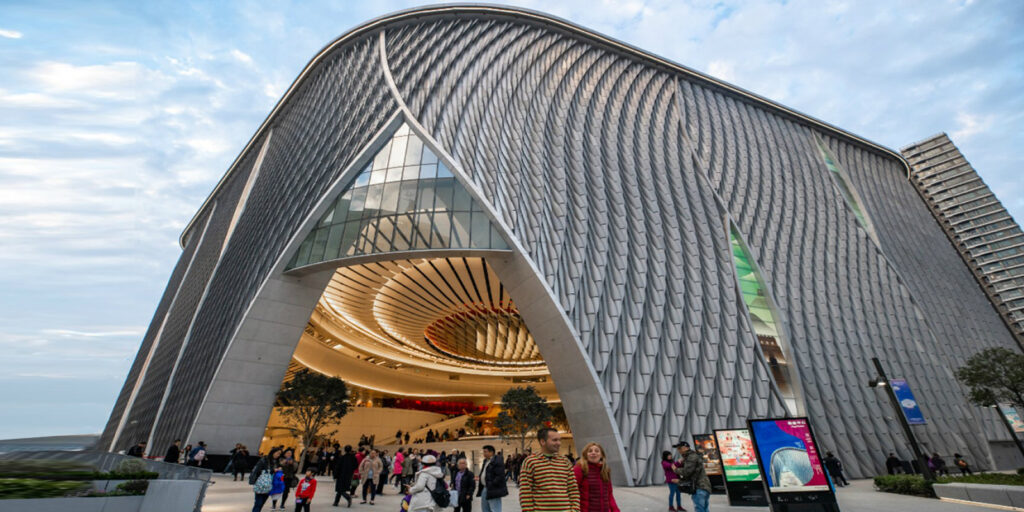
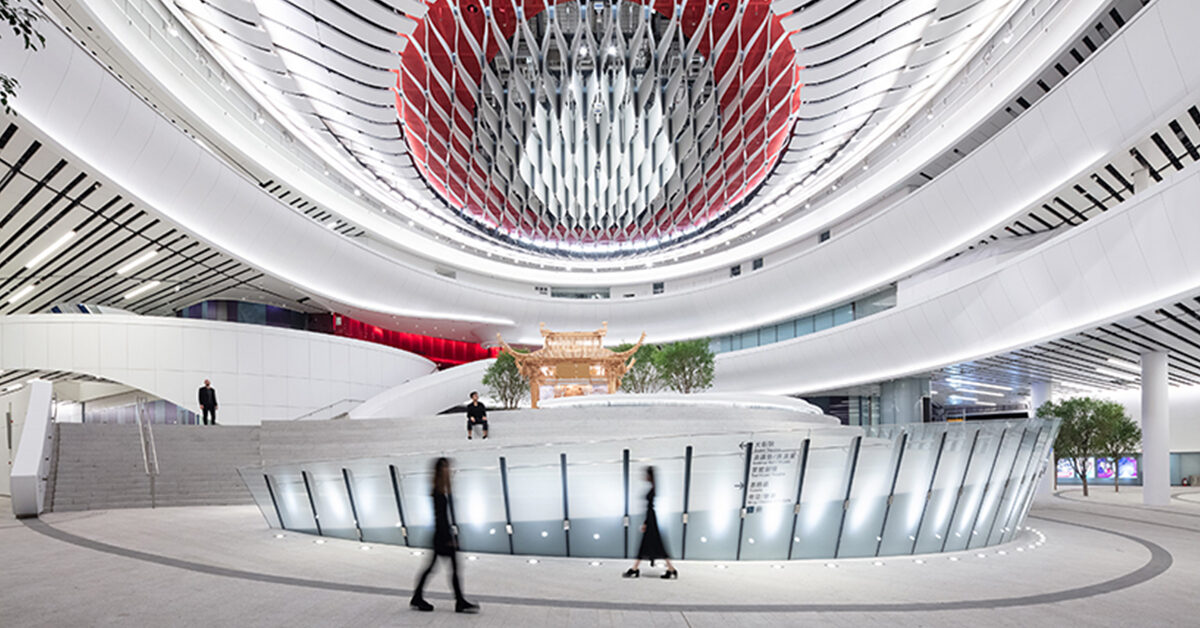
Located at the West Kowloon Cultural District, the Xiqu Center was completed in 2019 as homage to Chinese heritage and culture. This expansive space is dedicated to the promotion of Chinese performance arts, more specifically xiqu or Chinese opera. The structure’s façade immediately unveils the activities and spirit of Chinese performance arts. Aluminum metal panels are woven to appear like shining draped curtains over the building. This design invites a free flow of visitors as they explore the many cultural experiences at the Xiqu Center.

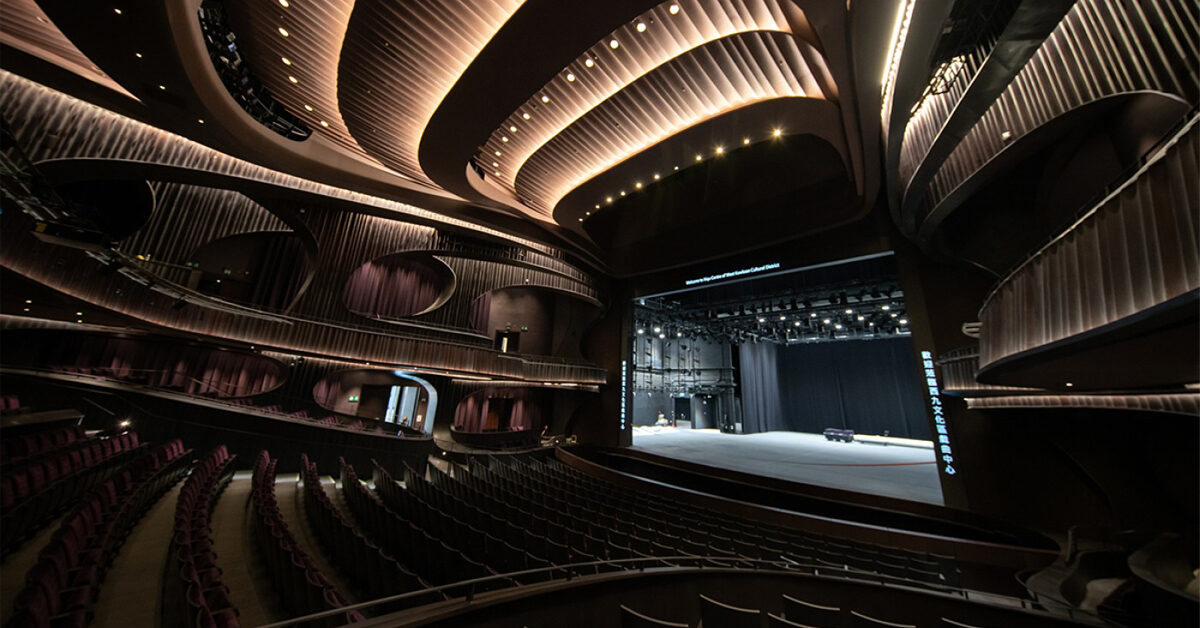
The Grand Theater, which can accommodate an audience of  up to 1,075 people, is a feat of architectural design. Sitting on top of the building, it rests 27 meters above the ground. The Tea House Theater beneath seats up to 200 individuals. It aims to reintroduce Hong Kong’s time-honored tradition of serving audiences tea and dimsum while watching performances.

Apart from the two theaters, this architectural and cultural landmark will also feature training facilities, retail spaces, and rehearsal studios as well. The entire center is flanked by two sky gardens that look out to the Victoria Harbour. This adds a sense of oneness with nature and invites visitors to linger and discover the magnificence of Chinese performance arts. Noted by TIME magazine in 2019 as “one of the world’s greatest places”, Xiqu Center in Hong Kong is an experience not to be missed by either design or performance arts enthusiasts. 

Reference: https://www.westkowloon.hk/en/xiqucentre#overview

Reinstated Interiors Inspired by Asian Culture

Antique, art, furniture and fabrics that tell the story of Asian heritage and culture, enliven modern spaces.

ANTIQUE CERAMICS AND PORCELAIN
China
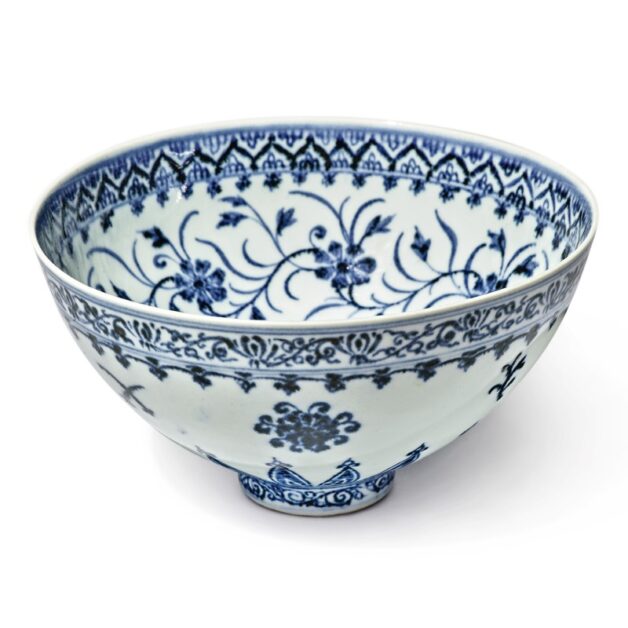
Blue and white floral bowl from the Ming Dynasty sold on auction for USD721,800 at Sotheby’s.

CHINESE ANTIQUE CERAMICS AND PORCELAIN are stunning art pieces beloved by taste makers for their craftsmanship, elegance, and beauty. Of all the Chinese antiques, vessels and ceramics are the most popular and highly prized. Precious porcelains that date back to the Ming Dynasty were made in the porcelain town of Jingdezhen, Jianxi Province. They are considered the most superior of all the antiquities from the region.

These distinctive blue and white jars and vessels are characterized by intricate depictions of daily life, nature, and the times. Art and antiquities experts describe them as elaborate compositions that “convey and glorify that majesty and benevolence of the Ming Dynasty.” At Sotheby’s, avid collectors of blue and white Ming porcelain can access these precious pieces of Chinese art. Through the work and research of its global Chinese Ceramics and Works of art department, the revered auction house has managed to grow a collection of over 1,300 rare porcelains and antiques. Bidders from all over the world can also access these iconic gems through dedicated live and online auctions. 

BONE INLAY FURNITURE
India
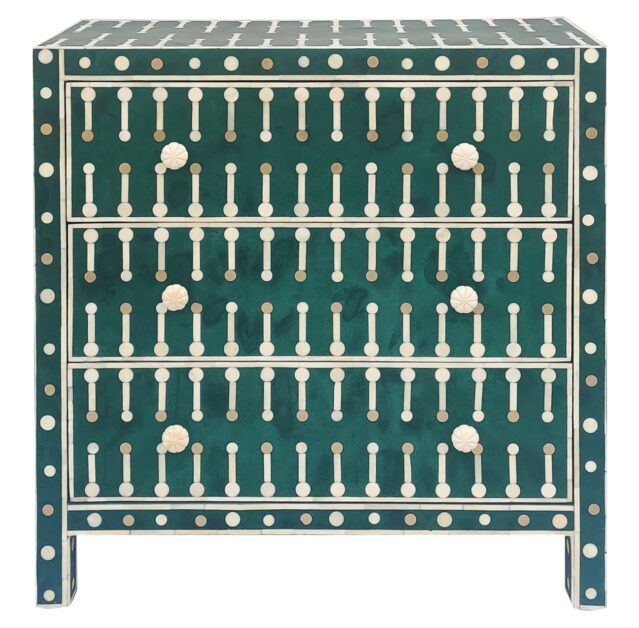
INDIAN BONE INLAY is an ancient art form that originated in the Rajasthan region of India. These meticulously handcrafted pieces, similar to marquetry, were first made solely for the royal palaces and maharajas. This revered craft has been passed down through generations, taking at least a month to reach completion. The meticulous process begins with shaping of fragmented bones into the design. Each shaped bone is then attached onto the surface, piece by piece. To fill the empty spaces and create evenness on the surface, colored resin is poured as the finishing layer. The result is a mosaic-like visual narrative that brings centuries of culture and art to life.

As more modern homes adapt to minimalist and contemporary sensibilities, designs for bone inlay furniture have also evolved. Artisera, a curated space for Indian furniture, antiques, and fine art from India, showcases a more contemporary take on bone inlay furniture. Decidedly streamlined and intended for living spaces of today, patterns are more subdued and geometric. Often, they draw from the shapes and forms of the art deco movement. Similarly, color ways hint at modern French interior design palettes. From bedside tables, to consoles and lower coffee tables, the modern iterations of inlay furniture are striking accents that lend eclectic flair to well-designed spaces.   

SILKS AND OBIS
Japan
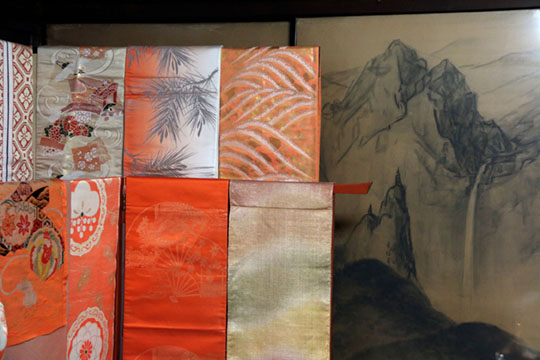
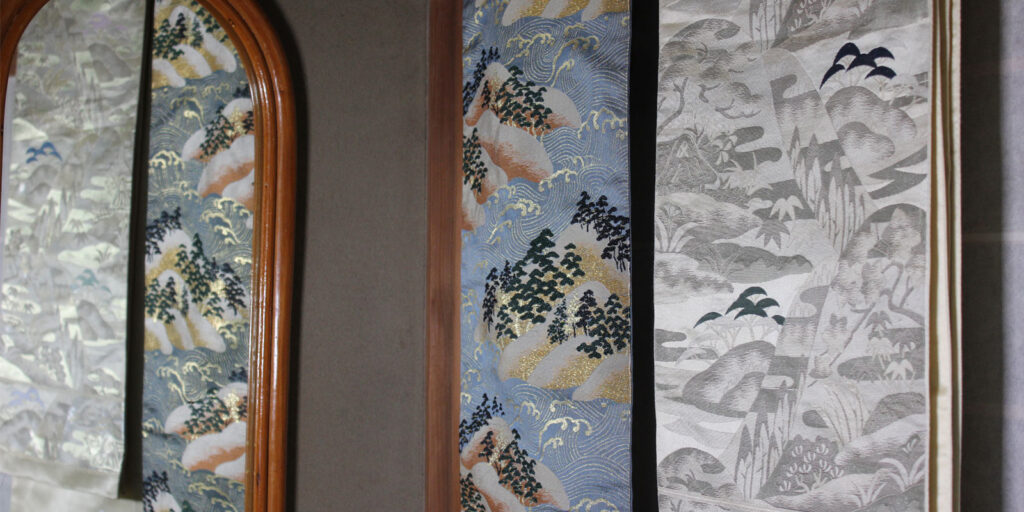
JAPANESE SILKS AND OBIS echo an approach to luxury that is distinct only to Japan. Instead of gold and gems, the affluent were have said to distinguish themselves through the kimonos and fabrics they wore. These beautifully woven and embroidered silks, referred to as Nishijin were regarded as jewelry and used to dressed nobles of Kyoto’s imperial courts. There are countless other tales, best told through silks, kimono, and obis, that echo Japan’s rich history. While these narratives go as far back as 1,200 years, they continue to live on through emerging designers.

Mikan, an up-and-coming sustainable brand founded by French designer Clementine Sandner, was born out of a passion for antique Japanese kimonos. Since relocating to Japan in 2016, the founder and designer has been collecting pre-loved textiles from across the region and repurposing them into beautiful pieces. Clementine shares, “In Japan, as in most countries, the younger generations tend to lose interest in national costumes. With the modernization of Japan, people switched to western clothing, leaving behind beautiful and precious hand-woven fabrics, resulting of a precious heritage passed on through generations. Mikan looks at these discarded kimono and obi like treasures from the past and brings them back into a new life.”

Although primarily a maker of bags, Mikan has recently expanded into the home décor realm. Panels of rare kimonos or silks are hung all throughout the Kyoto-based studio. Like landscape paintings, they light up the space and serve as windows to the past. Clementine adds, “I wanted to create pieces that also decorate the room. During an exhibition I had in Kyoto, I hung more than 30 pieces of obi around the gallery so people could walk around the enjoy the beauty of the materials.”

Reference:
https://www.studiointernational.com/index.php/treasures-of-the-ming-dynasty-are-unearthed-in-jingdezhen
https://www.worldhistory.org/Ming_Porcelain/#:~:text=The%20Ming%20dynasty%20is%20rightly,countries%20from%20Japan%20to%20Britain.
https://www.history.com/topics/ancient-china/ming-dynasty
https://www.mikanbags.com/
https://www.sothebys.com/en/sell/sculpture/chinese-antiques
https://www.artisera.com/collections/bone-inlay-furniture
https://www.architecturaldigest.com/story/indian-craft-ones-to-watch
https://www.architecturaldigest.com/gallery/exotic-design-roundup-slideshow
https://www.fentonandfenton.com.au/pages/all-about-bone-inlay#:~:text=The%20time%2Dhonoured%20art%20of,of%20a%20three%2Dstep%20method.
http://craftsmartindia.blogspot.com/2016/02/the-timeless-art-of-bone-inlay.html
https://www.nytimes.com/2020/12/02/fashion/craftsmanship-kimono-silk-hosoo-kyoto-japan.html
https://www.nytimes.com/2014/12/26/arts/design/kimono-a-modern-history-at-the-met-tells-rich-stories-through-fabric.html
https://en.wikipedia.org/wiki/Jingdezhen_porcelain

Candeo Hotels Kyoto Karasuma Rokkaku Kyu-Banke Residence – Transforming a Kyoto Cultural Property with Modern Design

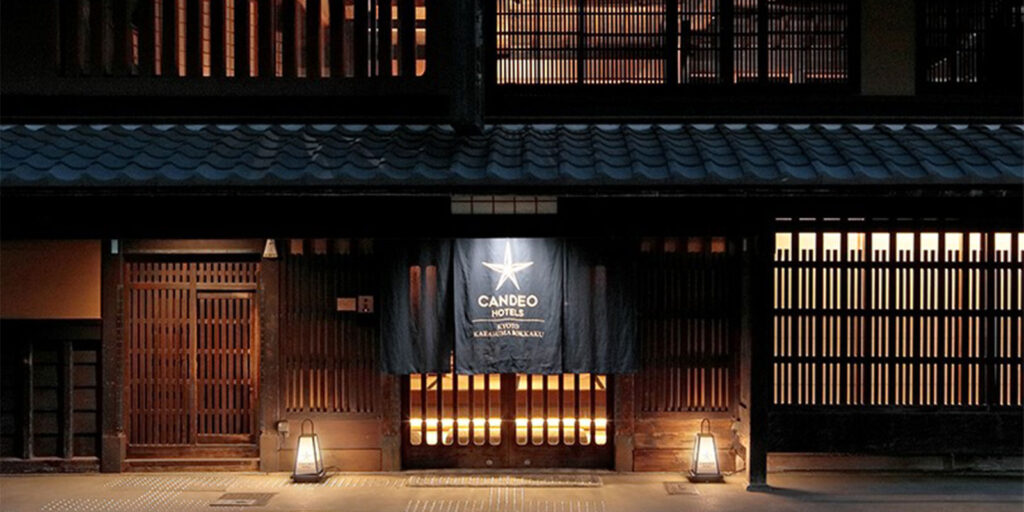
Candeo Hotels Kyoto Karasuma Rokkaku opened in June 2021. GARDE was involved in the conceptualization, facade, basic planning, basic design, and project supervision.

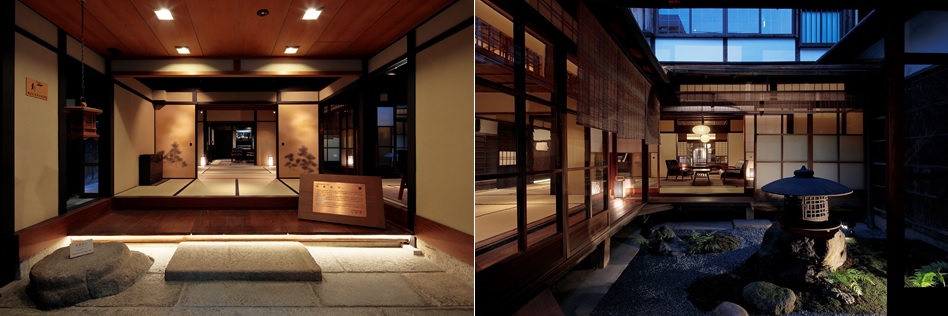
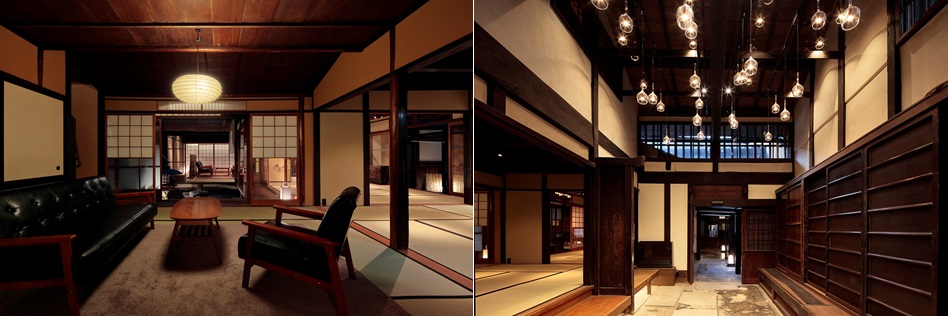
The main feature of this hotel is that it is a redesign of a traditional Japanese townhouse, the “Former Banke Family Residence,” which is a very valuable registered tangible cultural property of Kyoto City. In particular, the tatami room, which consists of the main room and the next room, has been finished in the sukiya (Japanese traditional tearoom) style, with bark surface pillars and screens. In addition, the main room has a floor, shelves, and a hirashoin (non-projecting study window), and the shelves are decorated with ink paintings by artist Ike no Taiga. In order to maximize the charm of the house, the tatami mats in the reception room, lounge, and bar have been retained, and the original courtyard has been preserved so that visitors can enjoy the Kyoto townhouse style, while relaxing from the reception room on the first floor.

The combination of Kyoto’s traditional architecture and culture with modern technology and techniques, as well as a wealth of wisdom, has resulted in the creation of a unique Machiya experience in Karasuma, Kyoto. It is a “Cultural Experience Facility” and a “Machiya” that allows guests to experience Kyoto culture as if they were living there.

* What is the Banke Residence?
The Banke family was born in Omihachiman-cho and moved to the present location in 1896, where they have operated a kimono wholesale store for generations. The main building was built in the omoteyazukuri style, with an entrance building connecting the store building and the residential building in the back and is thought to have been in its present form in 1911. Architecturally, the tatami room is particularly noteworthy. The tatami room, which consists of the main room and the next room, is finished in the sukiya (traditional Japanese tearoom) style, with bark surface pillars and screens. The details are elaborate, and the design is excellent. Although the main house has been slightly altered, it retains the atmosphere of a traditional Kyoto townhouse. In addition, there is a tendency for townhouses in Kyoto to renovate only the tatami room during the Meiji and Taisho periods.
The tatami room of this house is one such example, showing the trend of townhouses in modern times.
(Registered in Kyoto City on April 1, 1991.)
(Quoted from the signboard of Kyoto City Historic Site)

【Design】
The hotel consists of three buildings: a reception building, a guest room building, and a public bath. The reception building, which serves as the entrance to the hotel, is a redesign of the former Banke family residence*, is a registered tangible cultural property of Kyoto City. The earthen floor itself has been left as is, creating a space that gives the impression of an alley in Kyoto. In addition to the lounge, a library and bar space have been created to increase your experience, and to make your stay more fulfilling.

●Reception Building
The reception room, bar, and lounge are followed up by the tatami space. In the reception room on the ground floor, the sliding doors are decorated with ink paintings by Ike no Taiga, a literary painter from Kyoto, and an entranceway scented with sandalwood, reminiscent of Japan, creating a relaxing space. In the bar on the second floor, the hanging lights on the street floor seen through the latticed windows create a scene resembling lanterns displayed at a festival, creating the feeling of living in a traditional Japanese townhouse.
The earthen floor, which has existed for ages, has been turned into a dirt floor, creating a space reminiscent of the alleys of Kyoto.


Left: Entrance   Right: Tsuboniwa(Inner Garden)


Left: Reception room on the ground floor  Right: Tori-Doma (Passageway of Earthen floor)

●Guest Room Building
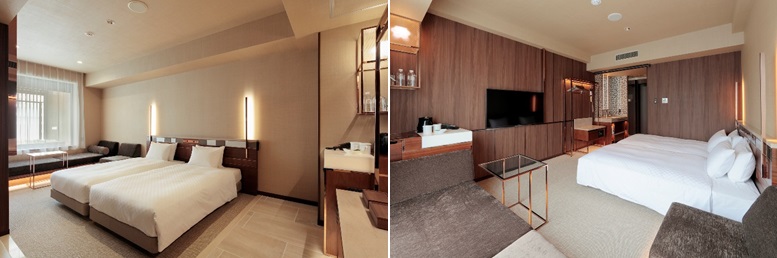
While utilizing the characteristic straight lines of Japanese architecture, we introduced unexpected Western finishes such as travertine colors and warm pink bronze details in the patterns. By incorporating walnut, we created a space surrounded by a sense of luxury.
The gentle impression of the travertine and the indirect view of the townhouse reflected in the metal parts create a modern design while maintaining a sense of harmony with the historic architecture of the townhouse.


Left: Suite room   Right: Twin room

●Public Bath Building

◆About Candeo Hotels Kyoto Karasuma Rokkaku
The 10-story hotel has 106 rooms, including 2 rooms with private spa facilities. The hotel also features the largest bath in the Candeo Hotels chain, which is an outdoor bath with a pleasant breeze blowing through it, allowing guests to bask in the fresh air. The men’s bath has a dry sauna and a water bath, while the women’s bath has a mist sauna, providing a delicate space where you can relax and refresh yourself after a long day of sightseeing in Kyoto.

During the Gion Festival, the busiest time of the year in Kyoto, a jomyoyama float is assembled in front of the hotel. As well as being both functional and well designed, the Candeo Hotels Kyoto Karasuma Rokkaku is an exquisite and unique hotel where you can feel the Gion Festival at its closest.

Facility Overview
–     Official name: Candeo Hotels Kyoto Karasuma Rokkaku
–     Location: 149 Konyadori, Karasuma Nishiiru, Rokkaku-dori, Nakagyo-ku, Kyoto 604-8064
–     Site area: 828.99m2
–     Building area (built-up): 619.95m2
–     Floor area subject to floor area (all floors): 3302.55m2
–     Height: 31.00m, 10 floors above ground      
       *Only the guest room building and public bath are included.

Scope of Work
Concept planning, facade, basic planning, basic design and project supervision

Scroll to Top